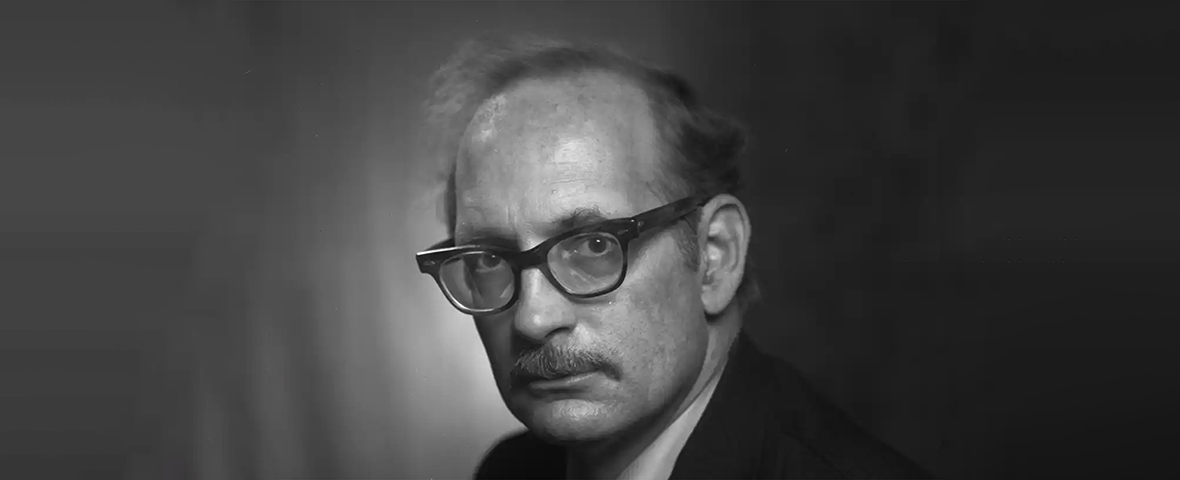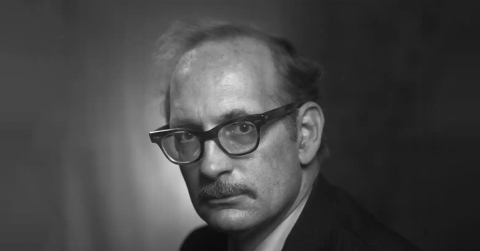
American composer George Crumb came to be indelibly linked with avant-garde and contemporary classical music of the 20th century. A professor at the University of Pennsylvania from the 1960s to the 1990s, Crumb was praised for his cutting edge compositions, using what the New York Times called “exotically sensual sound colors” and “extravagantly mystical allusions.” The Nonesuch recording of his Ancient Voices of Children in 1970 become a defining album of the label’s early years.
Born in 1929 in Charleston, West Virginia, American composer George Crumb came to be indelibly linked with avant-garde and contemporary classical music of the 20th century. Crumb completed his undergraduate studies at the Mason College of Music in Charleston and went on to earn a Master’s degree from the University of Illinois at Urbana-Champaign, followed by postgraduate studies at the Hochschule für Musik in Berlin and a doctorate from the University of Michigan.
Even before earning his doctorate, George Crumb began teaching at various universities throughout America, his longest tenure at the University of Pennsylvania, from the 1960s to the 1990s. At the same time, Crumb was being praised for his cutting edge compositions that often explored unusual timbres and extended instrumental techniques, using what the New York Times called “exotically sensual sound colors” and “extravagantly mystical allusions.” In the process, the composer garnered numerous awards, including a Fulbright Scholarship, a Guggenheim grant, a Pulitzer Prize, six honorary degrees, and a Grammy Award.
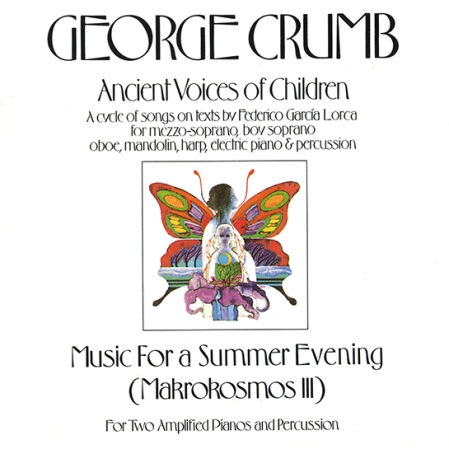
The Nonesuch recordings of Crumb’s Ancient Voices of Children, a song-cycle based on texts by Garcia Lorca, performed by Jan DeGaetani and the Contemporary Chamber Ensemble and recorded in 1970, and his Music for a Summer Evening (Makrokosmos III), recorded in 1975, would become a defining album of the label’s early years.
George Crumb died on February 6, 2022, at the age of 92.