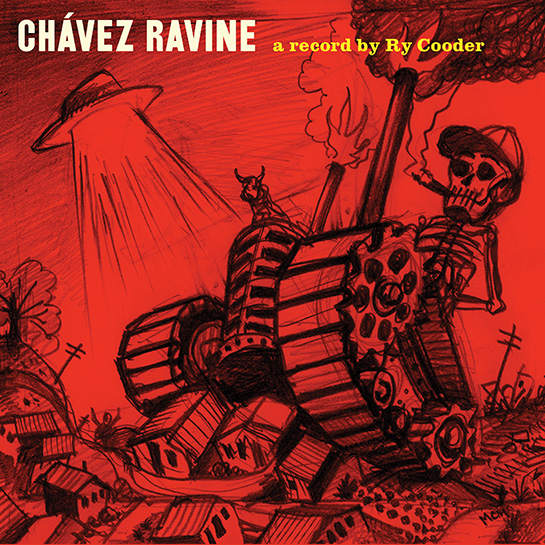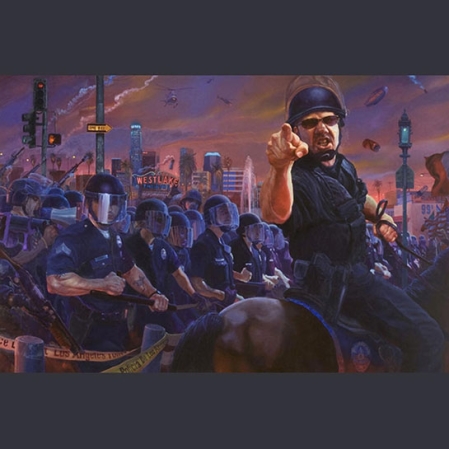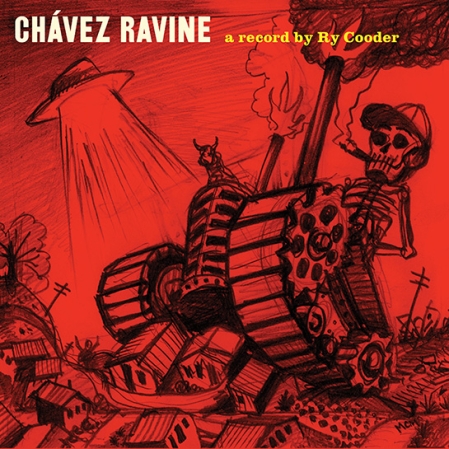
With a cast of legendary Chicano musicians, Cooder recounts the story of how a Mexican-American community was destroyed to make way for L.A.’s Dodger Stadium. Rolling Stone calls it “a remarkable song cycle … a brilliant and flavorful film-noir history lesson.” The 2019 two-LP vinyl edition was remastered from the original high-resolution source files and pressed on 140-gram vinyl. The set comes in a gatefold tip-on jacket with a twenty-page, full-color booklet.
Ry Cooder’s critically acclaimed album Chávez Ravine, first released on Nonesuch Records on June 14, 2005, made its vinyl debut on September 6, 2019. The two-LP vinyl edition was remastered by Martin Pradler from the original high-resolution source files and pressed on 140-gram vinyl at Record Industry in the Netherlands. The set comes in a gatefold tip-on jacket made at Stoughton Printing with a twenty-page, full-color booklet.
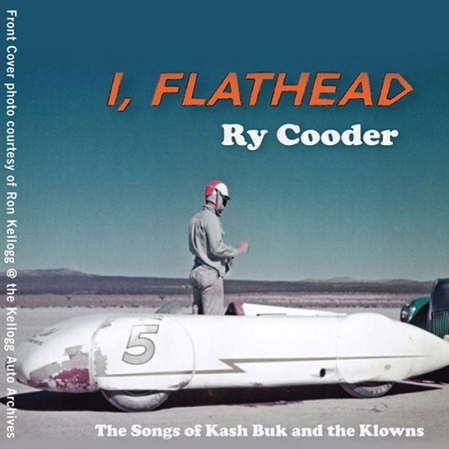
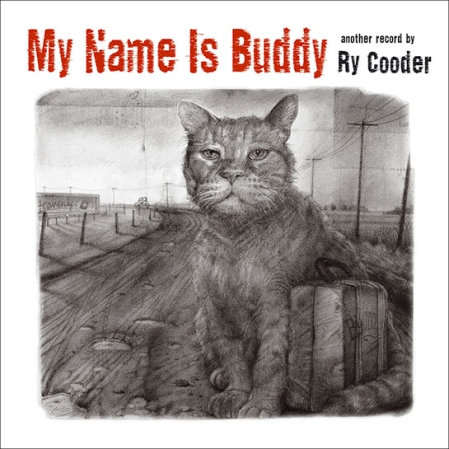
The first in his California trilogy, which would include 2007’s My Name Is Buddy and 2008's I, Flathead, Chávez Ravine is "a remarkable song cycle," said Rolling Stone, "a brilliant and flavorful film-noir history lesson." A post World War II–era American narrative of “cool cats,” radios, UFO sightings, J. Edgar Hoover, red scares, and baseball, the album is a tribute to the long-gone Los Angeles Latino enclave known as Chávez Ravine. Using real and imagined historical characters, Cooder and friends created an album that recollects various aspects of the poor but vibrant hillside Chicano community, which was bulldozed by developers in the 1950s in the interest of “progress”; Dodgers Stadium ultimately was built on the site. Cooder says, “Here is some music for a place you don’t know, up a road you don’t go. Chávez Ravine, where the sidewalk ends.”
Drawing from the various musical strains of Los Angeles, including conjunto, corrido, R&B, Latin pop, and jazz, Cooder and friends conjure the ghosts of Chávez Ravine and Los Angeles at mid-century. On this 15-track album, sung in Spanish and English, Cooder is joined by East L.A. legends like Chicano music patriarch Lalo Guerrero, Pachuco boogie king Don Tosti, Thee Midniters front man Little Willie G., and Ersi Arvizu of The Sisters and El Chicano.
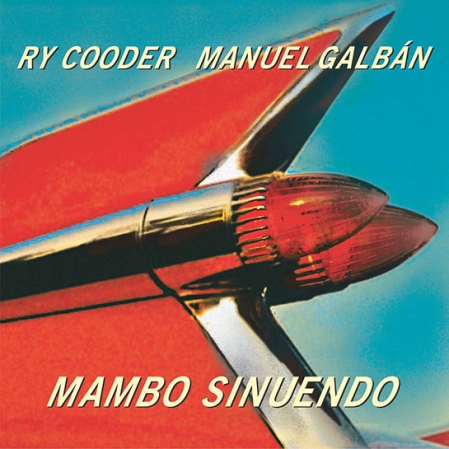
A Los Angeles native, Cooder had been working in Cuba since 1998, producing Buena Vista Social Club, Ibrahim Ferrer, Ferrer’s Buenos Hermanos, and Mambo Sinuendo—all Grammy winners; three years in the making, Chávez Ravine marked his musical homecoming.
“Los Angeles was paved over, malled up, high-rised, and urban-renewed, as fortunes were made, power was concentrated, and everything got faster and bigger,” Cooder said upon the album's release in 2005. "But there is a lot I miss now. The texture of certain older neighborhoods, like Bunker Hill, a rural feel in urban places, like Chávez Ravine and the timbre of life there, and just peace and quiet."
PRODUCTION CREDITS
Produced by Ry Cooder
Recorded by Rail Jon Rogut at Village Recorders, Los Angeles, CA, and Sound City Studios, Van Nuys, CA
Assisted by Okhi Kim and Pete Martinez
Additional recording by Jerry Boys, Sunny Levine, and Don Smith at Sound City Studios, Orange Stella, and Capitol Studios, Hollywood, CA
Mixed by Don Smith at Drive-By Studio, Los Angeles, CA
Digital Editing by Martin Prader
Mastered by Stephen Marcussen at Marcussen Mastering, Hollywood, CA
Package Design: Tracey Shiffman
Front cover illustrations by Michael C. McMillen
79877
MUSICIANS
Ry Cooder, vocals (1-3, 10, 11), guitar (1, 3-8, 10-12, 14, 15), organ (1), tres (1, 9), laud (2), bajo sexton (4, 12)
Juliette Commagere, vocals (1, 7-9, 15), vocal chorus (2, 3)
Jim Keltner, drums (1, 6, 8), bongos (3)
Mike Elizondo, bass (1-6, 9, 10, 12-14)
Joachim Cooder, timbales (1, 3, 8), percussion (2), drums (4, 5, 7, 10, 12, 13, 15), sampling (5, 9, 15)
Carla Commagere, vocals (7), vocal chorus (2, 3, 8)
Little Willie G., vocals (2, 8, 15), vocal chorus (5)
Joe Rotondi, piano (2, 4, 6-8, 14)
Gil Bernal, tenor saxophone (2, 6, 8, 14)
Mike Bolger, trumpet (2, 7, 14), organ (7, 8), valve trombone (7, 14)
Ledward Kaapana, guitar (2, 13, 14)
Jon Hassell, trumpet (3)
Lalo Guerrero, vocals (4, 6, 13), guitar (13)
Flaco Jimenez, accordion (4, 12, 13)
Ersi Arvizu, vocals (5, 12, 15)
Jacob Garcia, vocal chorus (5)
Chucho Valdés, piano (5)
Jared Smith, bass (7, 8, 15), keyboard (9)
Rudy Salas, Michael Guerra, vocal chorus (8)
Dan Totsi, vocals (9)
Sunny D. Levine, drum programming (11)
Jacky Terrasson, piano (11)
Rosella Arvizu, vocal (12)
Bla Pahinui, vocals, guitar, ukulele (14)
David Hidalgo, guitar (15)