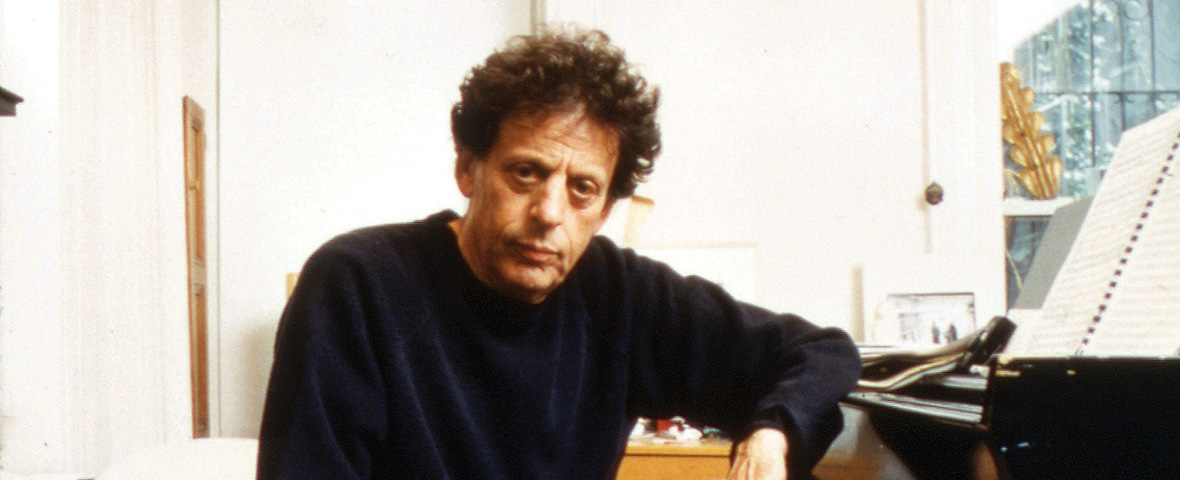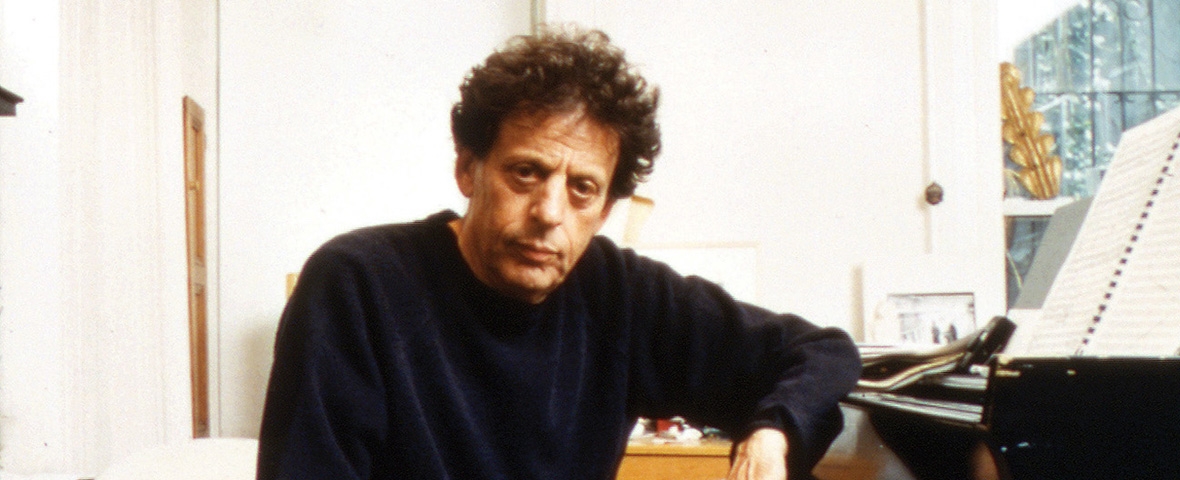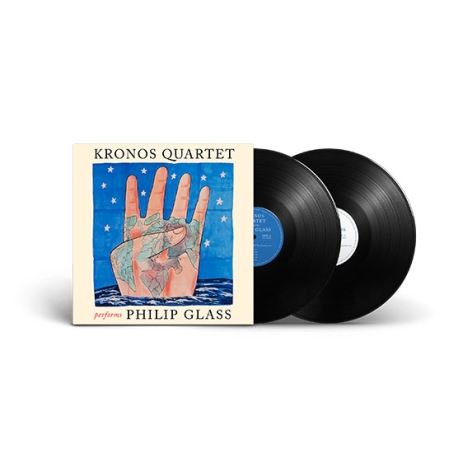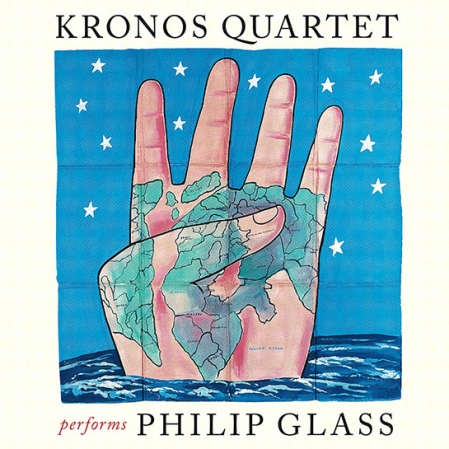
Philip Glass has collaborated with a variety of artists on projects ranging from opera to film scores to dance to unclassifiable theater pieces to orchestral works, and has been called "the best-known composer of art music in America, if not the world” (Los Angeles Times).
Born in Baltimore on January 31, 1937, Philip Glass discovered music in his father's radio repair shop. In addition to servicing radios, Ben Glass carried a line of records and, when certain ones sold poorly, he would take them home and play them for his three children, trying to discover why they didn't appeal to customers. These happened to be recordings of the great chamber works, and the future composer rapidly became familiar with Beethoven quartets, Schubert sonatas, Shostakovich symphonies, and other music then considered "offbeat." It was not until he was in his upper teens that Glass began to encounter more "standard" classics.
Glass began the violin at six and became serious about music when he took up the flute at eight. But by the time he was 15, he had become frustrated with the limited flute repertoire as well as with musical life in post-war Baltimore. During his second year in high school, he applied for admission to the University of Chicago, passed and, with his parent's encouragement, moved to Chicago, where he supported himself with part-time jobs waiting tables and loading airplanes at airports. He majored in mathematics and philosophy, and during off-hours practiced piano and concentrated on such composers as Ives and Webern.
At 19, Glass graduated from the University of Chicago. Determined to become a composer, he moved to New York and attended the Juilliard School. By then he had abandoned the 12-tone techniques he had been using in Chicago and preferred American composers like Aaron Copland and William Schuman.
By the time he was 23, Glass had studied with Vincent Persichetti, Darius Milhaud, and William Bergsma. He had rejected serialism and preferred such maverick composers as Harry Partch, Ives, Moondog, Henry Cowell, and Virgil Thomson, but still had not found his own voice. Still searching, he moved to Paris and spent two years of intensive study under Nadia Boulanger.
In Paris, he was hired by a filmmaker to transcribe the Indian music of Ravi Shankar into notation readable to French musicians. In the process, he discovered the techniques of Indian music. After researching music in North Africa, India, and the Himalayas, he returned to New York, renouncing his previous music, and applying eastern techniques to his own work.
By 1974, he had composed a large collection of new music, not only for use by the theater company Mabou Mines (Glass was one of the co-founders), but mainly for his own performing group, the Philip Glass Ensemble. This period culminated in Music in 12 Parts, a three-hour summation of Glass's new music, and reached its apogee in 1976 with the Philip Glass / Robert Wilson opera Einstein on the Beach, the four-and-a-half hour epic now seen as a landmark in 20th-century music theater. In addition to Einstein, Glass has collaborated with Robert Wilson on several other projects, like White Raven, an opera commissioned by Portugal to celebrate its history of discovery, and Monsters of Grace, a digital opera in three dimensions.
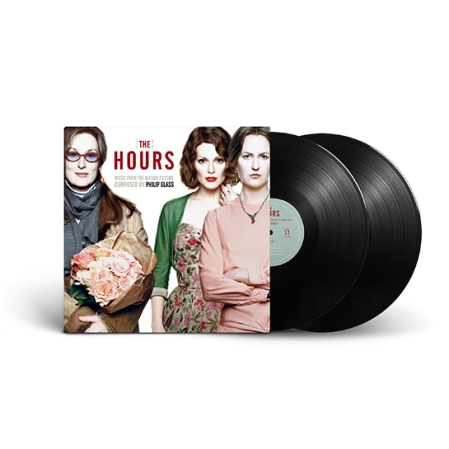
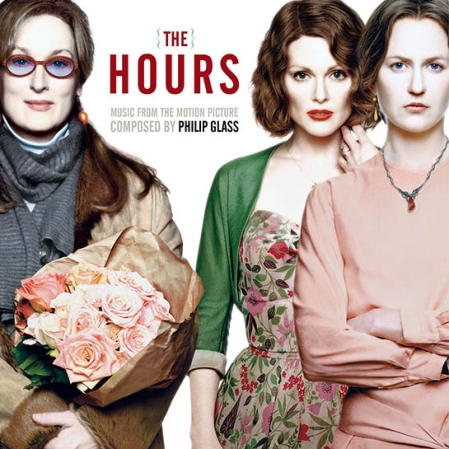
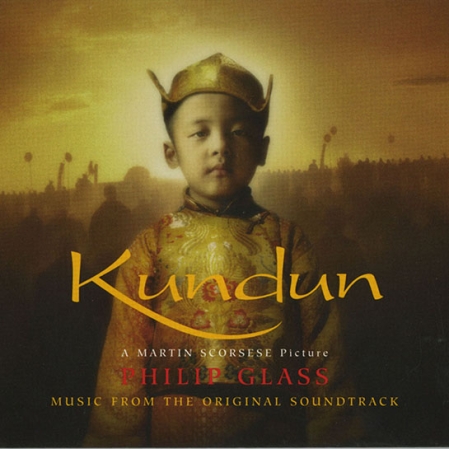
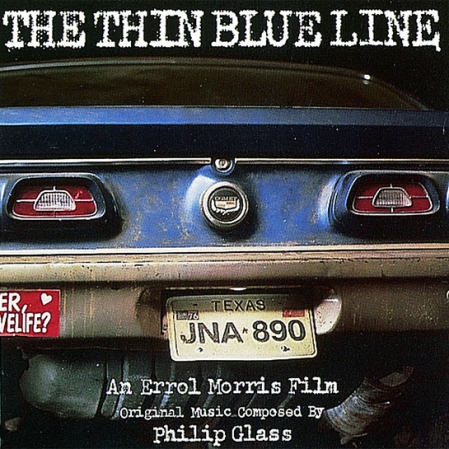
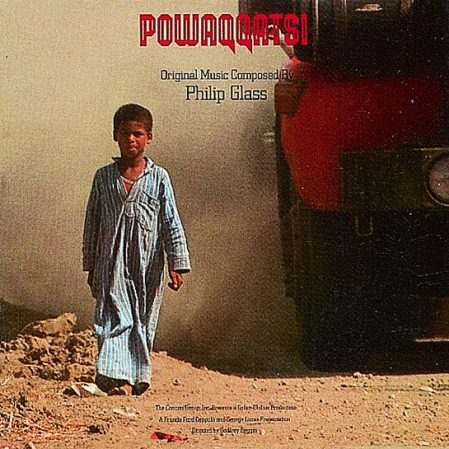
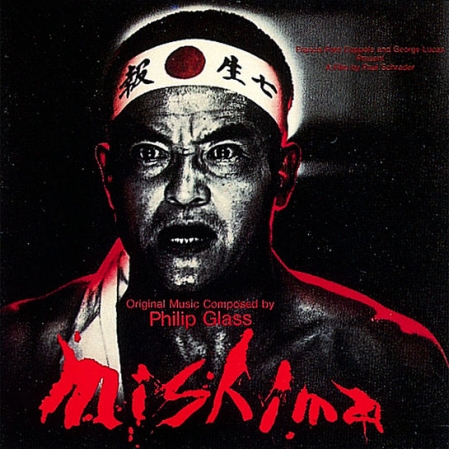
Since Einstein, Glass has collaborated with a variety of artists on projects ranging from opera (Satyagraha, Akhnaten, The Making of the Representative for Planet 8 with libretto by Doris Lessing, The Fall of the House of Usher, Hydrogen Jukebox with libretto by Allen Ginsberg), to film scores (Koyaanisqatsi, Mishima, The Thin Blue Line, Powaqqatsi, A Brief History of Time, Kundun, The Truman Show, The Hours, and an original score for the video re-release of the 1930s classic Bela Lugosi film Dracula), to dance (A Descent Into the Maelstrom and In the Upper Room, choreographed by Twyla Tharp), to unclassifiable theater pieces (The Photographer, 1,000 Airplanes on the Roof, The Mysteries, What's So Funny?, The Voyage), to a trilogy of musical theater pieces based on the films of Jean Cocteau (Orphée, La Belle et La Bête, Les Enfants Terribles), to cooperative recording projects (Songs from Liquid Days with lyrics by David Byrne, Paul Simon, Laurie Anderson, and Suzanne Vega; Passages, co-written with Ravi Shankar), to orchestral works (Itaipu, a large-scale work for chorus and orchestra; the “Low” and “Heroes” symphonies, both based on the music of David Bowie and Brian Eno).