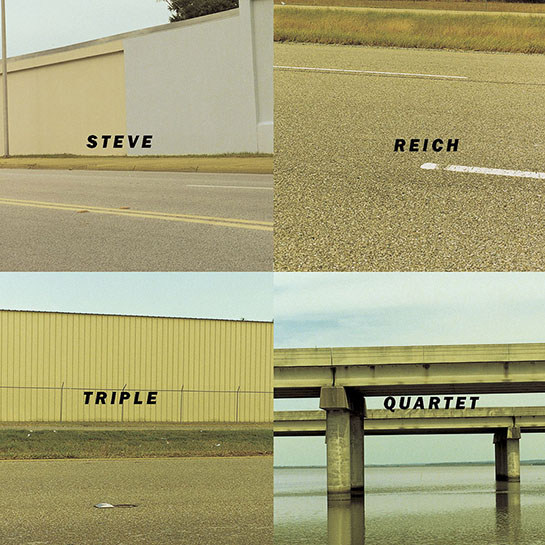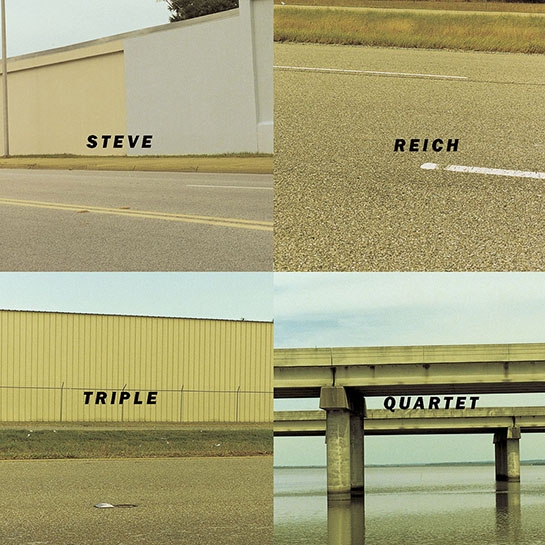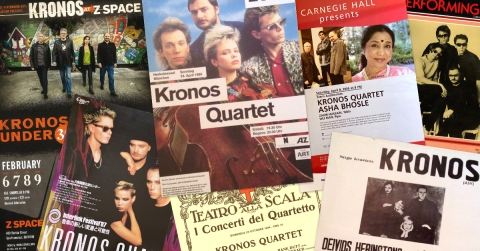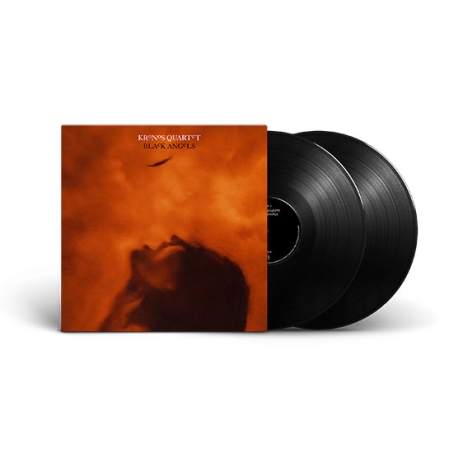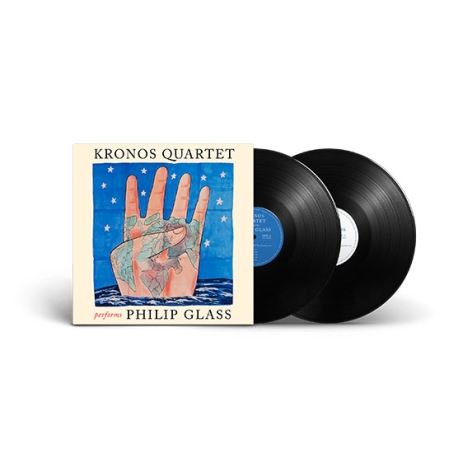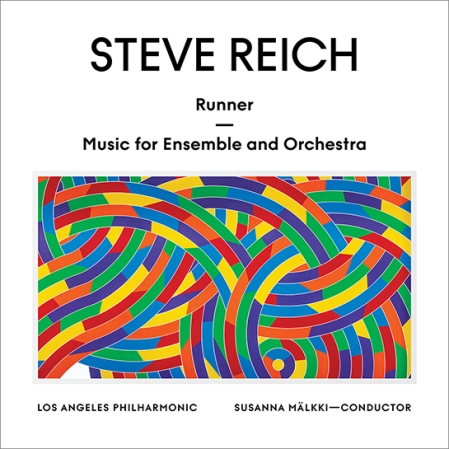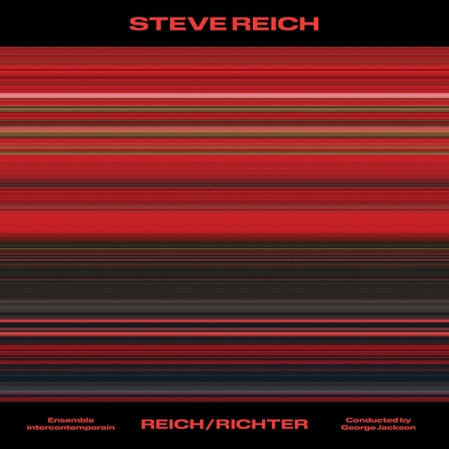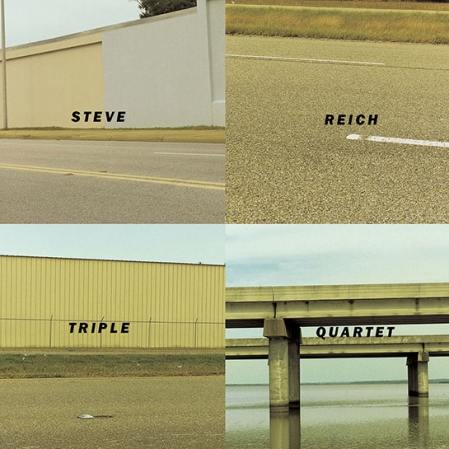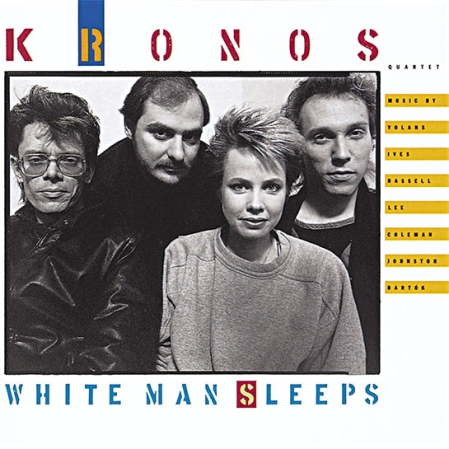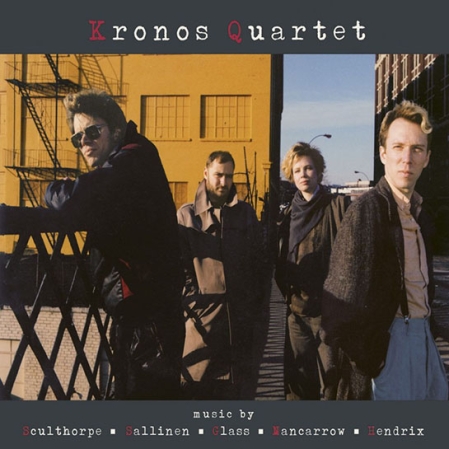
Kronos Quartet, overdubbed to three times its size, performs the title piece. The Boston Phoenix noted that Triple Quartet illustrates Reich’s “penchant for maximizing melody as well as the advantages of employing technology to widen the instrumental palette.”
The CD of this album is available to purchase at ArkivMusic.
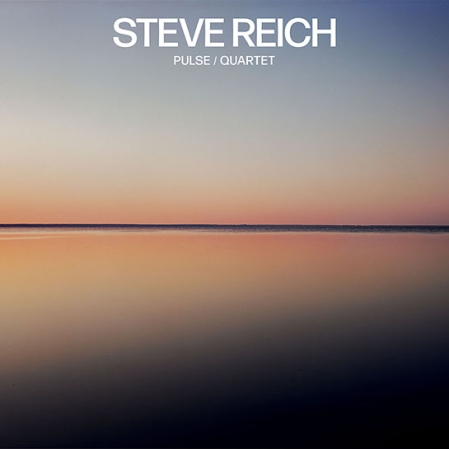
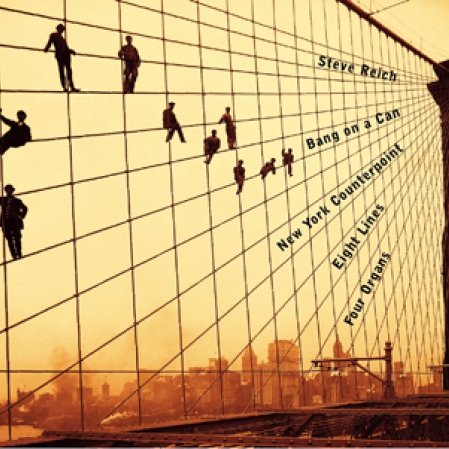
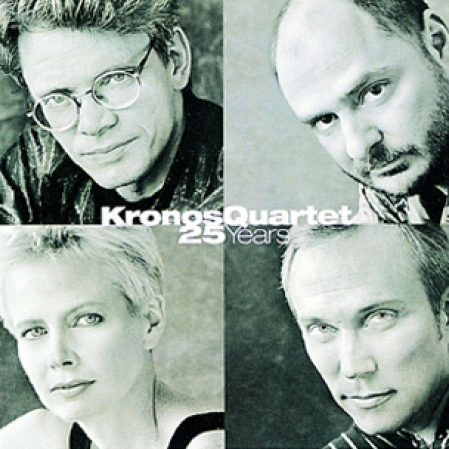
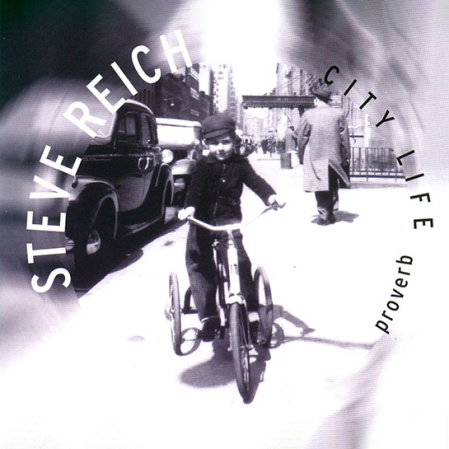
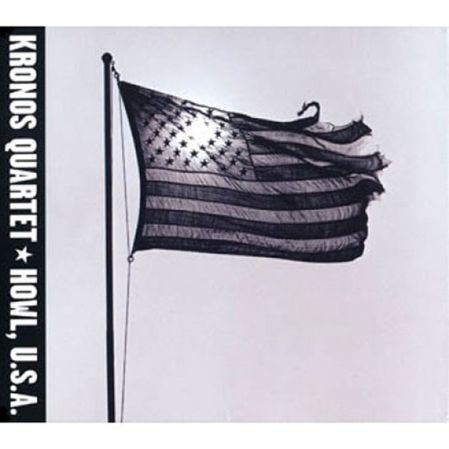
In October 2001, Nonesuch released the world premiere recording of Steve Reich’s Triple Quartet performed by Kronos Quartet, who commissioned the work and in whose honor it has been written. This disc, the first to include a new work by Reich since the 1996 release City Life, will also feature first recordings of Electric Guitar Phase and Tokyo/Vermont Counterpoint, as well as the first recording of a newly revised edition of Music for Large Ensemble.
Triple Quartet (1999) is a three-movement work written for three string quartets, and exists in three versions for performance: one for string quartet and pre-recorded tape, another for three string quartets (12 players) and the third for part of an orchestral string section of 36 players. On this recording Kronos pre-recorded quartets two and three and played the quartet one part along with the tape, as they do in live performance.
According to Reich, the initial inspiration for the piece came from the last movement of Bartók’s Fourth Quartet. “Its energy was my starting point,” he says. While working on the piece, he heard the music of Alfred Schnittke for the first time, specifically his string quartets, which deeply affected his writing, as did Michael Gordon’s Yo Shakespeare. Reich says, “the piece became considerably more dissonant and expressionistic than expected,” as a result of these influences.
Electric Guitar Phase (2001), performed by the young guitarist Dominc Frasca, is a new version of the 1967 work Violin Phase. It is written for four electric guitars, and on this recording Frasca performs all four parts, which are then overdubbed. The layers create a number of melodic patterns that develop from the combination of two or three electric guitars playing the same repeating pattern slightly out of phase with one another. Key melodic material is played softly at first and then at gradually increased volume, bringing it to the surface of the music and making the listener more aware of how the melodic pattern helps to create texture.
Alan Pierson, director of Alarm Will Sound and the Ossia ensemble from the Eastman School of Music, worked on reconstructing the original score of Reich’s Music for Large Ensemble, adding two extra violins to the string ensemble and making the saxophone and voice parts optional. The work was originally written in 1977 and revised for its first recording in 1979. Another reworked version of an older piece is Tokyo/Vermont Counterpoint (2000) for MIDI marimbas (KAT controllers), a new version of Vermont Counterpoint (1981), originally scored for flutes, alto flutes and piccolos. According to Reich it is not only a radically different version than the original, but is clearly “one with a sense of humor.”
PRODUCTION CREDITS
Album Produced by Judith Sherman and Steve Reich
Triple Quartet
Produced by Judith Sherman
Recorded March & April 1999 and August 2000 at Skywalker Sound
Engineered by John Kilgore
Assistant Engineers: Bob Levy and Dann Thompson
Mixed by Steve Reich, Judith Sherman and John Kilgore at Masque Sound
Electric Guitar Phase
Arranged by Dominic Frasca
Produced and engineered by Dominic Frasca
Recorded January 2001 at DV8 Studios, New York City
Mixed by Steve Reich, Judith Sherman, John Kilgore and Dominic Frasca at Masque Sound
Music for Large Ensemble
Produced by Alan Pierson, Clay Greenberg, and Rob Haskins
Recorded May and September 2000 at the Kresge Recording Studios of the Eastman School of Music, Rochester, NY
Engineered by Justin Volpe
Edited and mixed by Alan Pierson
Assistant Mix Engineers: Jennifer Graham, Kala Pierson, and Ian Quinn
Project Coordinator: Gavin Chuck
Tokyo/Vermont Counterpoint
Arranged by Mika Yoshida
Produced by Mika Yoshida
Recorded March 1998 at Toms Studio, Hondo City, Kumamoto, Japan
Engineered by Hidenori Shimada
Edited and mixed by Ray Dillard
Mastered by Robert C. Ludwig at Gateway Mastering Studios, Portland, ME
Design by John Gall
Photography by Jason Fulford
Executive Producer: Robert Hurwitz
79546
MUSICIANS
Triple Quartet
Kronos Quartet: David Harrington, violin; John Sherba, violin; Hank Dutt, viola; Jennifer Culp, cello
Electric Guitar Phase
Dominic Frasca, electric guitar
Music for Large Ensemble
Alarm Will Sound and Ossia
Alan Pierson, conductor, vibraphone
Dennis DeSantis, Chris Vatalaro, Payton MacDonald, Mike Robbins, marimbas
Alexander Postelnek, Clay Greenberg, xylophones
Ian Quinn, Thomas Rosenkranz, Paul Vasile, Fang-Tzu Liu, pianos
Brianna Winters, Martha Cluver, voices
Laura Motchalov, Paul Yaeger, Caleb Burhans, Yasmin Craig, violins
Amelia Hollander, Paul Miller, violas
Stefan Freund, Susie Kelly, cellos
Ike Sturm, Brent Bulmann, basses
Brian Hermanson, Miranda Dohrman, clarinets
Jessica Johnson, flute
Todd Rewoldt, Josh Rutner, soprano saxophones
Jason Price, Eli Asher, Brent Madsen, Will Jennings, trumpets
Tokyo/Vermont Counterpoint
Mika Yoshida, MIDI marimba