X
By submitting my information, I agree to receive personalized updates and
marketing messages about Nonesuch based on my information, interests,
activities, website visits and device data and in accordance with the
Privacy Policy. I understand that I can opt-out at any time by emailing
privacypolicy@wmg.com.
Thank you!
x
Welcome to NONESUCH'S mailing list.
Customize your notifications for tour dates near your hometown, birthday wishes, or special discounts in our online store!
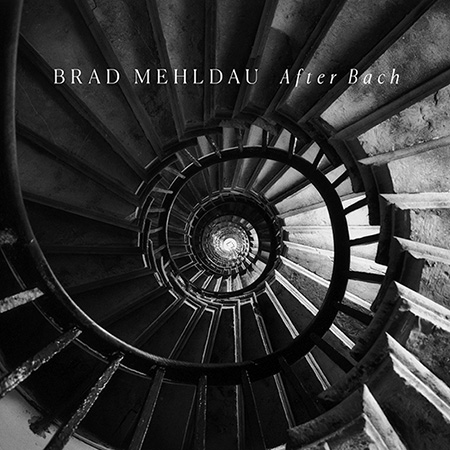
Brad Mehldau's After Bach is due March 9, 2018, on Nonesuch. The album comprises the pianist/composer's recordings of selections from J.S. Bach's Well-Tempered Clavier, each followed by a piece written by Mehldau and inspired by its WTC mate. "There have always been elements of Mehldau's style that recall Bach," writes Timo Andres in the liner note. "After Bach surveys their shared ground as keyboardists, improvisers, and composers, making implicit parallels explicit.” Pre-order After Bach for an instant download of the track "After Bach: Rondo," which can be heard here.
Copy
Brad Mehldau's After Bach is due March 9, 2018, on Nonesuch Records. The album comprises the pianist/composer's recordings of four preludes and one fugue from J.S. Bach's Well-Tempered Clavier, each followed by an After Bach piece written by Mehldau and inspired by its WTC mate. The album begins with Mehldau's own "Before Bach: Benediction" and ends with his "Prayer for Healing."
Pre-orders of After Bach are available now at iTunes and in the Nonesuch Store and include an instant download of the album track "After Bach: Rondo," which can be heard on Apple Music, Spotify and here:
As Mehldau's label mate Timo Andres says in his After Bach liner note, "As a professional organist, much of Bach's work took the form of improvisation, and during his lifetime it was the virtuosity and complexity of these improvisations for which he was most admired … Some three centuries after the fact, Brad Mehldau takes up this tradition and applies it to a frustratingly unknowable aspect of Bach's art."
Andres continues, "There have always been elements of Mehldau's style that recall Bach, especially his densely-woven voicing—but he's not striving to imitate or play dress-up. Rather, After Bach surveys their shared ground as keyboardists, improvisers, and composers, making implicit parallels explicit."
After Bach originated in a work Mehldau first performed in 2015—commissioned by Carnegie Hall, The Royal Conservatory of Music, The National Concert Hall, and Wigmore Hall—called Three Pieces After Bach.
Brad Mehldau's "After Bach" Due March 9 on Nonesuch Records
Brad Mehldau's After Bach is due March 9, 2018, on Nonesuch Records. The album comprises the pianist/composer's recordings of four preludes and one fugue from J.S. Bach's Well-Tempered Clavier, each followed by an After Bach piece written by Mehldau and inspired by its WTC mate. The album begins with Mehldau's own "Before Bach: Benediction" and ends with his "Prayer for Healing."
Pre-orders of After Bach are available now at iTunes and in the Nonesuch Store and include an instant download of the album track "After Bach: Rondo," which can be heard on Apple Music, Spotify and here:
As Mehldau's label mate Timo Andres says in his After Bach liner note, "As a professional organist, much of Bach's work took the form of improvisation, and during his lifetime it was the virtuosity and complexity of these improvisations for which he was most admired … Some three centuries after the fact, Brad Mehldau takes up this tradition and applies it to a frustratingly unknowable aspect of Bach's art."
Andres continues, "There have always been elements of Mehldau's style that recall Bach, especially his densely-woven voicing—but he's not striving to imitate or play dress-up. Rather, After Bach surveys their shared ground as keyboardists, improvisers, and composers, making implicit parallels explicit."
After Bach originated in a work Mehldau first performed in 2015—commissioned by Carnegie Hall, The Royal Conservatory of Music, The National Concert Hall, and Wigmore Hall—called Three Pieces After Bach.
X
By submitting my information, I agree to receive personalized updates and
marketing messages about Nonesuch based on my information, interests,
activities, website visits and device data and in accordance with the
Privacy Policy. I understand that I can opt-out at any time by emailing
privacypolicy@wmg.com.
Thank you!
x
Welcome to Nonesuch's mailing list!
Customize your notifications for tour dates near your hometown, birthday wishes, or special discounts in our online store!
Brad Mehldau's "After Bach" Due March 9 on Nonesuch Records
Brad Mehldau's After Bach is due March 9, 2018, on Nonesuch Records. The album comprises the pianist/composer's recordings of four preludes and one fugue from J.S. Bach's Well-Tempered Clavier, each followed by an After Bach piece written by Mehldau and inspired by its WTC mate. The album begins with Mehldau's own "Before Bach: Benediction" and ends with his "Prayer for Healing."
Pre-orders of After Bach are available now at iTunes and in the Nonesuch Store and include an instant download of the album track "After Bach: Rondo," which can be heard on Apple Music, Spotify and here:
As Mehldau's label mate Timo Andres says in his After Bach liner note, "As a professional organist, much of Bach's work took the form of improvisation, and during his lifetime it was the virtuosity and complexity of these improvisations for which he was most admired … Some three centuries after the fact, Brad Mehldau takes up this tradition and applies it to a frustratingly unknowable aspect of Bach's art."
Andres continues, "There have always been elements of Mehldau's style that recall Bach, especially his densely-woven voicing—but he's not striving to imitate or play dress-up. Rather, After Bach surveys their shared ground as keyboardists, improvisers, and composers, making implicit parallels explicit."
After Bach originated in a work Mehldau first performed in 2015—commissioned by Carnegie Hall, The Royal Conservatory of Music, The National Concert Hall, and Wigmore Hall—called Three Pieces After Bach.
Wood shop proprietor and Wilco friend and fan Nick Offerman has cracked open the new nine-LP, four-CD deluxe edition of the band's GRAMMY-winning 2004 album A Ghost Is Born to take a look inside. You can watch the unboxing video here.
The Amsterdam-based duo of Bolivian-born singer/instrumentalist Ibelisse Guardia Ferragutti and Chicago ex-pat jazz drummer Frank Rosaly have released a remix of "BALADA PARA LA CORPORATOCRACIA," from their debut album, MESTIZX, by Andy Moor, of the Dutch anarcho-punk band The Ex. "Andy has so much experience with communal music from around the globe ... but he’s also lived the life of a musical activist, which is apparent in everything he does," Ferragutti and Rosaly say. "We didn’t think 'BALADA PARA LA CORPORATOCRACIA' could get any filthier, but he proved us wrong!" Ferragutti, Rosaly, and their band tour the US in March, with shows in Chicago, Minneapolis, Philadelphia, NYC, and Big Ears Festival in Knoxville.